California DMV Permit Practice Mini Test 3: 12 Questions
Published · Updated
Mini Test 3 has 12 multiple-choice questions on California driving rules, including turnout areas, wet road slowdown, seat belt requirements and railroad stopping distance. Each answer is explained as soon as you pick it, and every question is listed with its answer in the study guide below.
More California Practice Tests
Practice by Topic
What Mini Test 3 Covers
The questions in this test ask about:
- Turnout Areas
- Wet Road Slowdown
- No Left Turn Sign
- Seat Belt Requirements
- Uncontrolled Intersection Rules
- Yellow Curb Rules
- Blind Pedestrian Right-of-Way
- Headlight Visibility Rule
- Missed Freeway Exit
- Freeway Merging
- Residential Speed Limit
- Railroad Stopping Distance
Try 5 Questions from This Test
-
In California, you are driving slowly on a two-lane road where passing is unsafe. When must you pull into a turnout to let vehicles pass?
Show answer
C. When five or more vehicles are following you
You must use a turnout area or lane to let other vehicles pass when you are driving slowly on a two-lane road, passing is unsafe, and five or more vehicles are following you (California Driver's Handbook, p. 16).
-
How much should you slow down on a wet road?
Show answer
C. By 5 to 10 mph
On a wet road, drive 5 to 10 mph slower than you would on a dry road (California Driver's Handbook, p. 61).
-
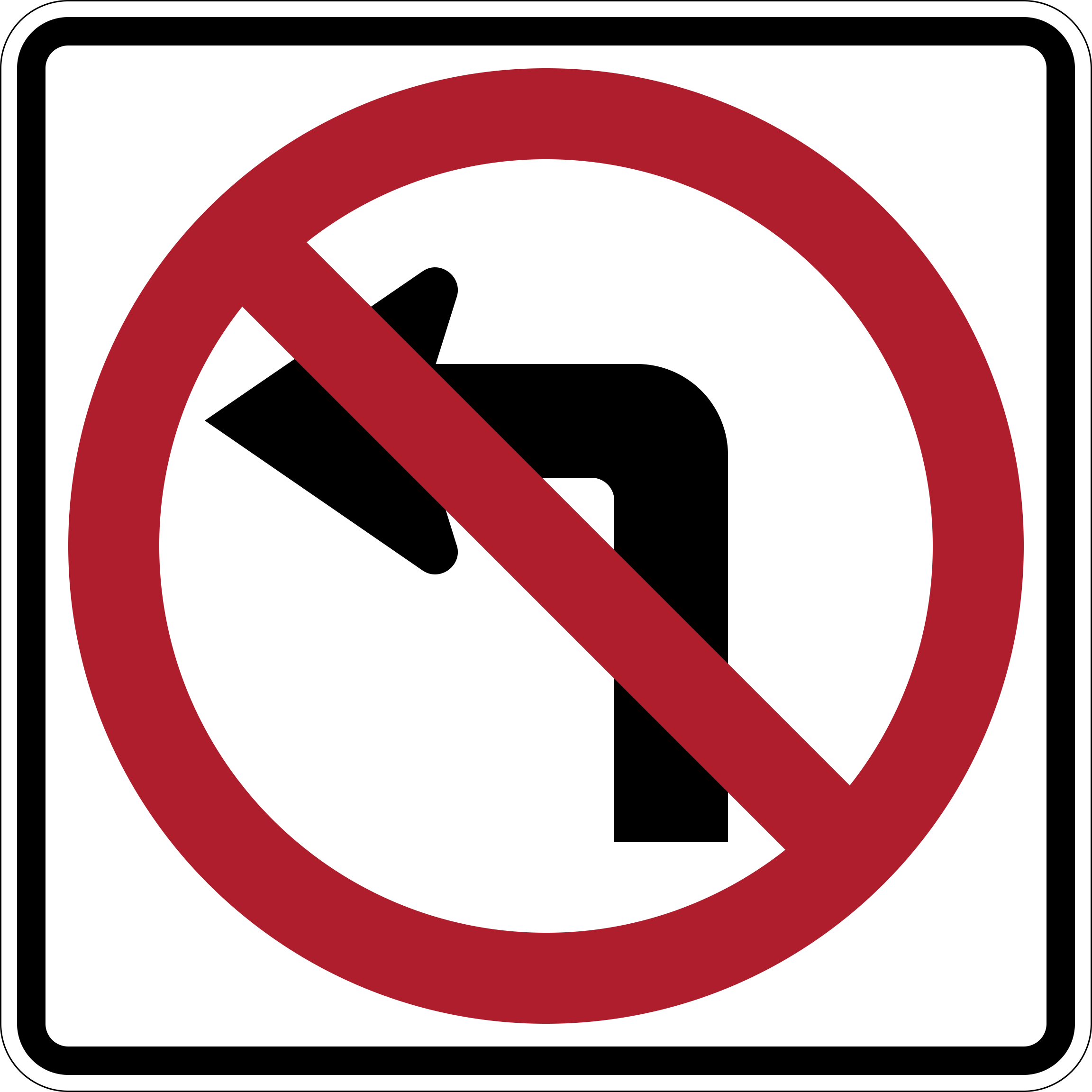
What does this sign mean?
Show answer
C. No left turn
A red circle with a red line through it means you may not do what the picture shows, so you may not turn left here (California Driver's Handbook, p. 38).
-
Seat belts are required for:
Show answer
C. All passengers and the driver
You and your passengers must wear seat belts. As the driver, you can also get a ticket if a passenger under 16 is not wearing one (California Driver's Handbook, p. 65).
-
Crossing devices warn that a train is coming. How far from the nearest track must you stop?
Show answer
A. At least 15 feet
When crossing devices or a person warn that a train is coming, stop at least 15 feet from the nearest track (California Driver's Handbook, p. 51).
Complete Study Guide: All 12 Questions with Answers
Every question in Mini Test 3, with the correct answer and an explanation for each.
-
Q1. In California, you are driving slowly on a two-lane road where passing is unsafe. When must you pull into a turnout to let vehicles pass?
Correct answer: When five or more vehicles are following you
Why: You must use a turnout area or lane to let other vehicles pass when you are driving slowly on a two-lane road, passing is unsafe, and five or more vehicles are following you (California Driver's Handbook, p. 16).
-
Q2. How much should you slow down on a wet road?
Correct answer: By 5 to 10 mph
Why: On a wet road, drive 5 to 10 mph slower than you would on a dry road (California Driver's Handbook, p. 61).
-
Q3. What does this sign mean?
Correct answer: No left turn
Why: A red circle with a red line through it means you may not do what the picture shows, so you may not turn left here (California Driver's Handbook, p. 38).
-
Q4. Seat belts are required for:
Correct answer: All passengers and the driver
Why: You and your passengers must wear seat belts. As the driver, you can also get a ticket if a passenger under 16 is not wearing one (California Driver's Handbook, p. 65).
-
Q5. You reach an intersection with no signs or signals. Another car got there before you. Who goes first?
Correct answer: The car that arrived first
Why: At an intersection without STOP or YIELD signs, the vehicle that arrives first has the right-of-way. If you arrive at the same time as another vehicle, pedestrian or bicyclist, give the right-of-way to the one on your right. Pedestrians always have the right-of-way (California Driver's Handbook, p. 39).
-
Q6. A yellow curb usually means:
Correct answer: Stop only to load or unload passengers or freight, for no longer than the posted time
Why: At a yellow curb, you may load and unload passengers and freight, but do not stop longer than the time posted. Drivers of noncommercial vehicles usually must stay with the vehicle (California Driver's Handbook, p. 28).
-
Q7. When approaching a crosswalk with a blind pedestrian using a white cane or guide dog:
Correct answer: Yield and stop if necessary
Why: Always yield to blind pedestrians; do not honk or distract them.
-
Q8. You must turn on your headlights when it is too dark to see from how far away?
Correct answer: 1,000 feet
Why: Use your headlights when it is too dark to see from 1,000 feet away, and from 30 minutes after sunset until 30 minutes before sunrise (California Driver's Handbook, p. 11).
-
Q9. If you miss your exit on the freeway:
Correct answer: Take the next exit
Why: If you miss a turn or exit, keep driving until you can safely and legally turn around, which on a freeway means taking the next exit (California Driver's Handbook, p. 15). Never make a U-turn on a divided highway by crossing a dividing section, curb, or strip of land (California Driver's Handbook, p. 20).
-
Q10. When merging onto a freeway, you should:
Correct answer: Match the speed of traffic
Why: Accelerate in the ramp to match traffic and merge smoothly.
-
Q11. In residential areas, the speed limit is typically:
Correct answer: 25 mph unless otherwise posted
Why: Residential/business districts are generally 25 mph unless posted otherwise.
-
Q12. Crossing devices warn that a train is coming. How far from the nearest track must you stop?
Correct answer: At least 15 feet
Why: When crossing devices or a person warn that a train is coming, stop at least 15 feet from the nearest track (California Driver's Handbook, p. 51).