Road Signs Test: What the Signs Mean, Plus a Practice Quiz
Skip to the road signs practice test
Sign questions often show you a picture and ask what it means. In real life you don't just need the name. You need to know what to do. So try one right now: read the sign, pick your answer, then watch what happens.
In this guide
- How does the road signs test work?
- What do road sign shapes mean?
- What do road sign colors mean?
- Regulatory signs: the rules
- Warning signs: what's ahead
- School signs
- Railroad crossing signs
- Road work signs
- Guide and service signs
- Road signs people mix up
- Road signs practice test: 15 scenarios
- Road signs test FAQ
How does the road signs test work?
It depends on your state. In many states, sign questions are mixed in with the rest of the permit test. In others, signs are their own part of the exam or a separate test. Delaware, Georgia, Indiana, Michigan, Missouri, New York, North Carolina, Virginia and Wisconsin all handle signs that way.
Some states set their own passing score for signs, so you can't make up for them with other questions:
- Virginia: all 10 road sign questions, plus 24 of the 30 general questions.
- North Carolina: 9 of 12 road signs.
- Wisconsin: 12 of 15 on the highway signs test.
- Georgia: 15 of 20 road signs, plus 15 of 20 road rules.
- Indiana: 80% on signs and 80% on traffic rules.
- New York: 2 of the 4 road sign questions, plus 14 of 20 overall.
See every state in how many questions are on the permit test.
What do road sign shapes mean?
Some shapes are saved for just one kind of sign. That helps you know a stop sign from far away, even before you can read it. These are the shapes to know:
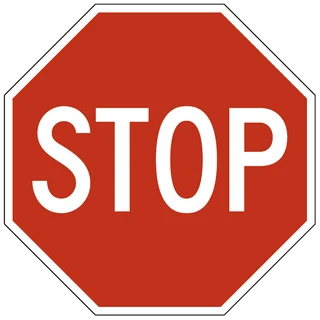
Octagon (8 sides)
Stop. Only stop signs use this shape.
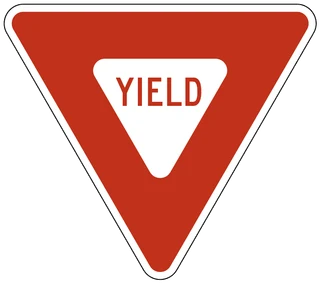
Triangle pointing down
Yield. Only yield signs use this shape.
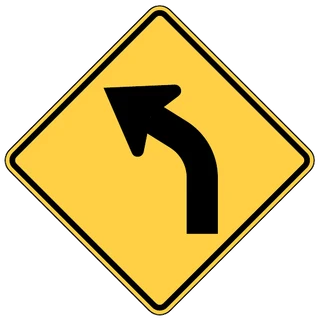
Diamond
Warning. Something up ahead needs your attention.
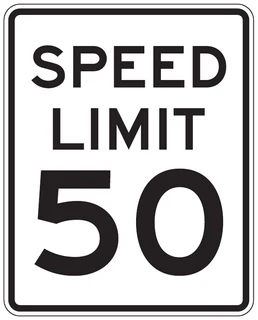
Rectangle
Usually a rule or directions. Some warnings use it too.
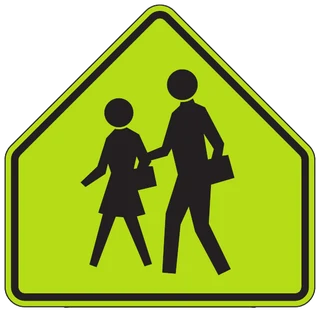
Pentagon (5 sides)
School zone or school crossing. County route markers use a similar shape.
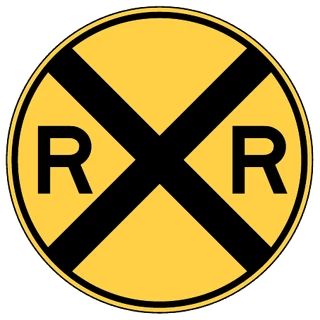
Circle
A railroad crossing is ahead.
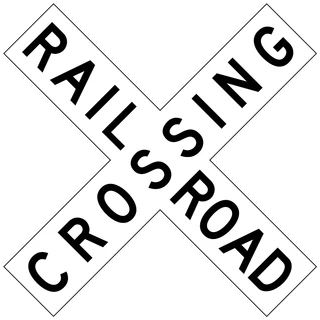
Crossbuck (X)
The railroad crossing itself.
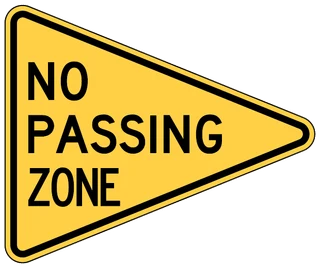
Pennant (sideways triangle)
A no-passing zone starts here. You'll see it on the left side of the road.
For more on each one, see our guide to road sign shapes and colors.
What do road sign colors mean?
Color tells you what kind of message you're looking at before you can read it. These meanings come from the federal manual that sets the standard for road signs:
Regulatory signs: the rules you have to follow
These signs are the law. Ignore one and you can get a ticket. Most are white rectangles, and the most important ones use red. A red circle with a slash always means "not allowed," and the picture inside tells you what.
Stop
Come to a full stop. Yield to traffic and people walking, then go when it's safe.
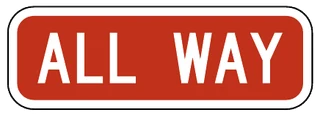
All Way
Under a stop sign. Traffic from every direction has to stop. See our 4-way stop rules.
Yield
Slow down and let others go first. Stop if you need to. More in our right-of-way rules.
Speed Limit
The fastest you can legally go in good conditions. Go slower when the weather or traffic calls for it.
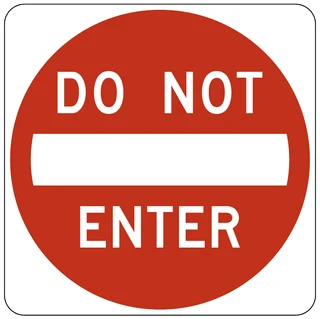
Do Not Enter
You can't go into this road from your direction. You'll see it at one-way streets and freeway exit ramps.
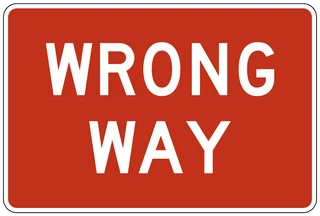
Wrong Way
You're driving against traffic. When it's safe, pull over and turn around.
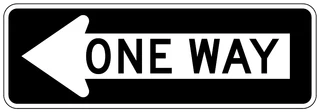
One Way
Traffic on this street only moves in the direction of the arrow.
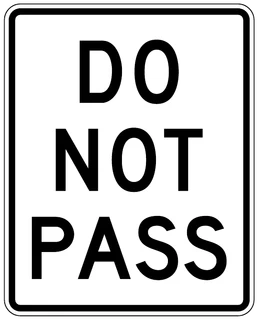
Do Not Pass
No passing here, even if the road looks empty. It often goes with a solid yellow line.
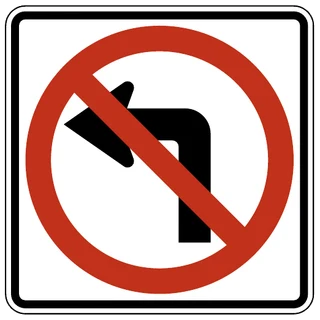
No Left Turn
Left turns aren't allowed here.
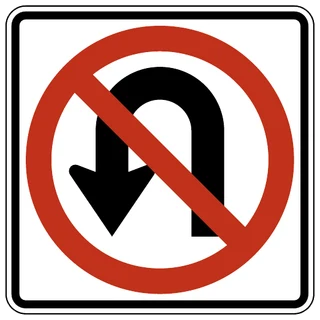
No U-Turn
U-turns aren't allowed here.
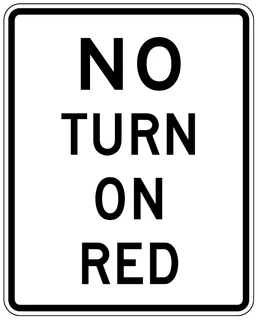
No Turn on Red
Wait for a green light or green arrow, even if the road is clear.
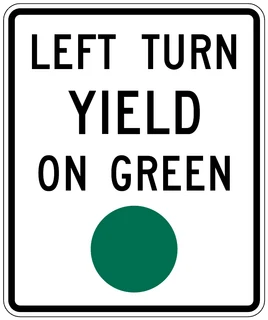
Left Turn Yield on Green
On a green light with no arrow, wait for oncoming traffic before you turn left.
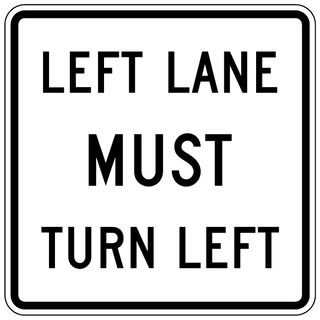
Left Lane Must Turn Left
If you stay in the left lane, you have to turn left. Move over early to go straight.
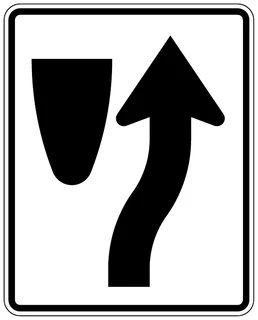
Keep Right
Stay to the right of the island or obstacle ahead.
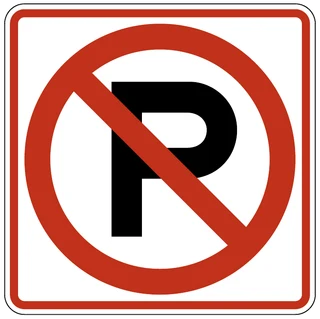
No Parking
You can't park here.
Warning signs: what's up ahead
Most warning signs are yellow diamonds with black symbols. They don't give you a rule. They tell you what's coming so you have time to slow down and get ready.
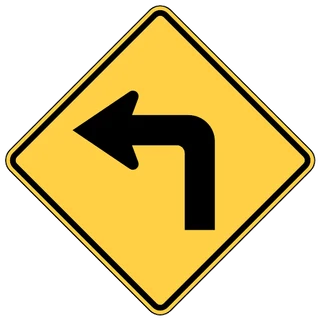
Turn
A sharp turn ahead, usually taken at 30 mph or less.
Curve
A gentler bend ahead, usually taken above 30 mph.
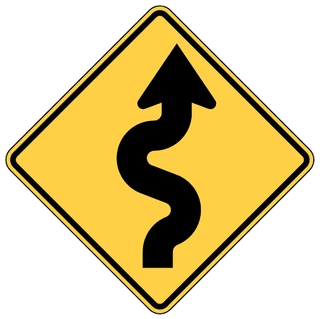
Winding Road
Three or more curves in a row.
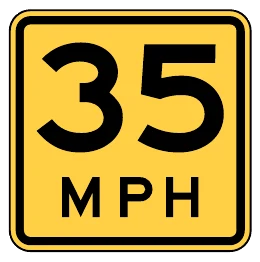
Advisory Speed
Under a warning sign. The highest speed advised for that curve or hazard.
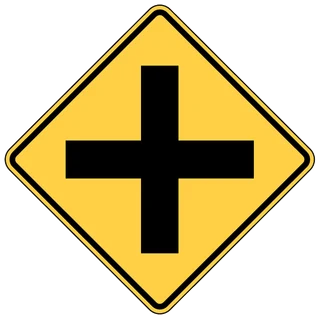
Cross Road
Another road crosses yours ahead. Watch for cars entering.
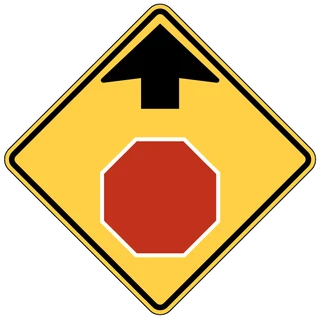
Stop Ahead
A stop sign is coming up that you might not see in time. Be ready to stop.
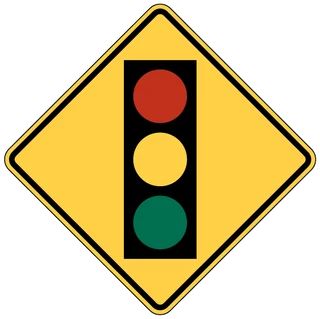
Signal Ahead
A traffic light is coming up. Be ready to stop.
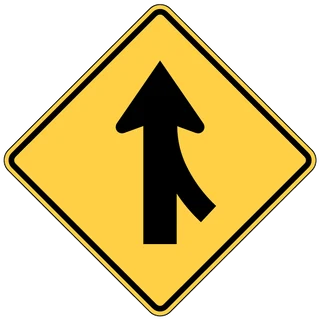
Merge
Traffic from another road joins yours, so be ready to make room. If you're the one on the ramp, find a gap and yield.
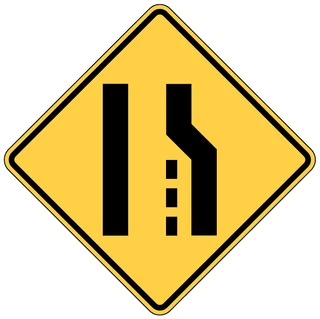
Lane Ends
One lane ends ahead. Move into the lane that keeps going when you can do it safely.
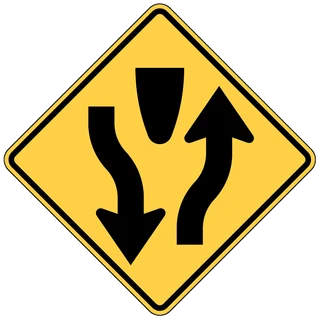
Divided Highway
The road ahead splits, with a median between the two directions.
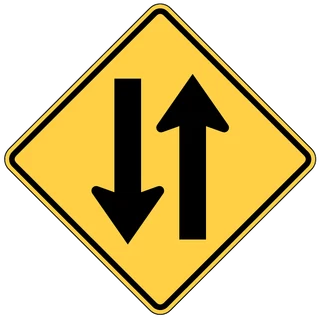
Two-Way Traffic
You're on, or coming to, a road with traffic both ways. Cars will be coming toward you.
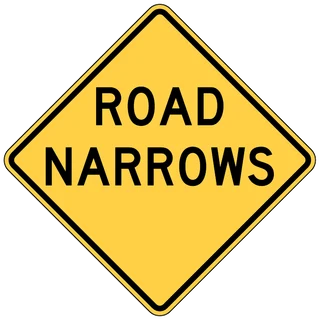
Road Narrows
The whole road gets narrower ahead. Slow down.
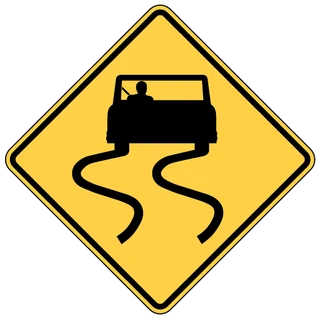
Slippery When Wet
Slow down in the rain, and go easy on the brakes and steering.
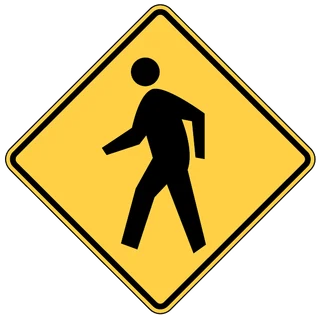
Pedestrian Crossing
People may be crossing ahead. Be ready to yield.
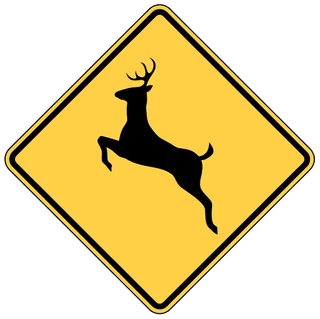
Deer Crossing
Deer often cross here. Slow down, especially at dawn and dusk.
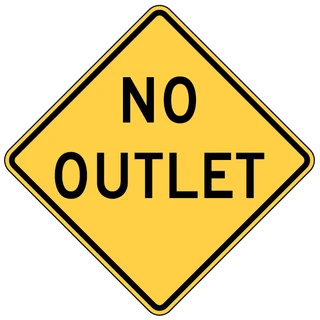
No Outlet
This road or area has no other way out. You'll leave the way you came in.
School signs
School signs are often bright yellow-green, so they're hard to miss. The five-sided sign means a school is close by. When you see one, slow down and watch for kids.
School
A school area, school zone or school crossing is near. With a down arrow, you're at the crossing.
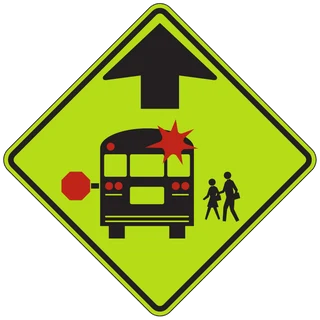
School Bus Stop Ahead
A stopped bus may be hard to see up ahead. Be ready to stop. Here's when to stop for a school bus.
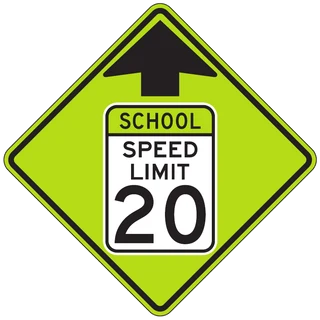
School Speed Limit Ahead
A lower school speed limit starts up ahead. Start slowing down.
Railroad crossing signs
There are two you need to know. The round yellow sign comes first and warns you that tracks are ahead. The white X marks the crossing itself. In most states, that X means you yield to trains, just like a yield sign.
Road work signs
Orange means road work or another temporary change. These are usually diamonds, like yellow warning signs, but they warn of workers, equipment and changing lanes.
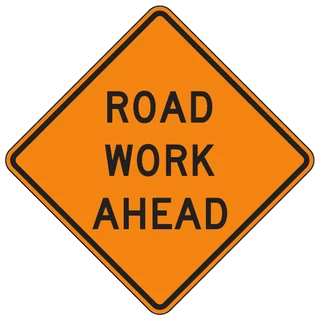
Road Work Ahead
Slow down and stay alert. Follow any signs or flaggers you see.
Guide and service signs
These don't warn you or give you a rule. They help you find your way. Color tells you what kind of help it is.
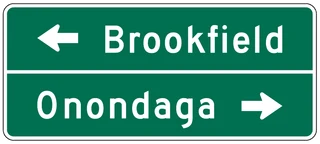
Green: places and directions
Which way to go to reach a town or road.
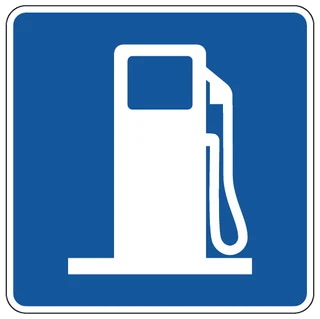
Blue: services
Help nearby, like gas, food or a place to stay.
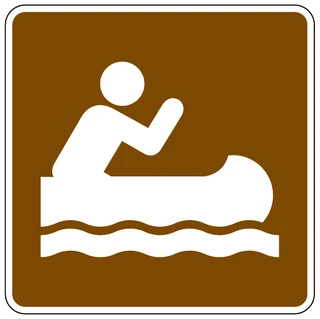
Brown: recreation
Parks and things to do nearby, like canoeing.
Road signs people mix up
These signs look alike, so they're easy to mix up. Learn the difference and you'll avoid the easy mistakes.
Do Not Enter vs. Wrong Way
Do Not Enter stops you before you go in. Wrong Way means you already did, so pull over and turn around.
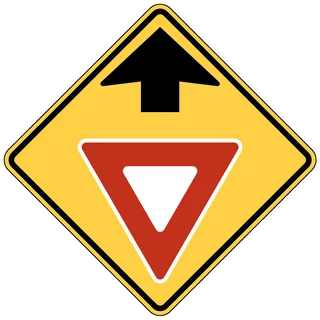
Yield vs. Yield Ahead
The red and white triangle is the yield sign itself. The yellow diamond only warns you that one is coming.
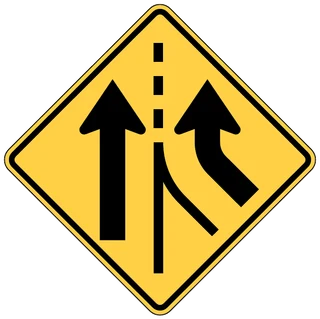
Merge vs. Added Lane
Merge means traffic is joining a lane with no lane added, so the main road makes room and the entering driver yields. Added Lane means they get their own lane, so nobody has to merge.
Lane Ends vs. Road Narrows
Lane Ends means one lane is going away, so move over. Road Narrows means the whole road gets tighter.
Turn vs. Curve
The bent arrow is a sharper turn. The curved arrow is a gentler bend.
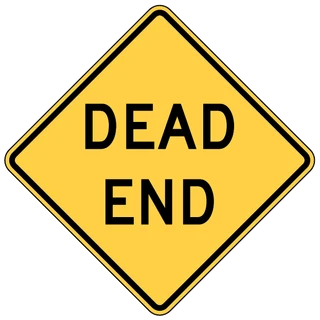
Dead End vs. No Outlet
Dead End is one road that stops. No Outlet is a road or group of streets with no other way out.
Road signs practice test: 15 scenarios
Each question puts you on the road with a real sign. Pick what you'd do, then watch how it plays out. Your score shows at the end.
Ready for test-style questions from your own state's manual?
Free DMV practice testsRoad signs test FAQ
Are road signs the same in every state?
Mostly. A federal manual sets the national standard for road signs, and every state's signs have to substantially follow it. You may still see small differences, and rules like when to stop for a train can vary, so check your state's manual too.
What is the difference between regulatory and warning signs?
A regulatory sign gives you a rule you have to follow, like a speed limit or No U-Turn. A warning sign tells you about something ahead, like a curve or a slippery road.
Do I have to obey the speed on a yellow sign?
A yellow speed plate isn't the legal speed limit, but it's the highest speed advised there, so stay at or below it. If you go faster, you can get a ticket for going too fast for the conditions, especially if you crash.
Signs are one part of the test. Our guide to how to prepare for the permit test walks through the rest.
More guides
Sources
Sign pictures come from the federal sign manual, which is in the public domain. Rules can differ by state, and your state's manual is the final word. Find yours on our driver handbooks by state page. This guide draws on:
- Federal Highway Administration, Manual on Uniform Traffic Control Devices, 11th Edition with Revision 1: sections 1B.01 (national standard), 1B.03 (state conformance), 1D.05 (colors), 2A.05 (shapes), Chapters 2B (regulatory signs) and 2C (warning signs), 6H.03 (road work), 7B (school signs), 8B.03 and 8B.06 (railroad crossings)
- Pennsylvania Driver's Manual page 10 (stop signs), page 11 (Do Not Enter, lane signs), pages 13 and 14 (advisory speeds), page 14 (merging), page 15 (slippery, two-way traffic), page 17 (school signs), page 18 (work zones)
- Illinois Rules of the Road page 26 (merge and yield signs), page 29 (no passing), page 64 (school signs), page 67 (No Turn on Red), page 71 (zipper merge), page 72 (merging)
- California Driver's Handbook page 38 (wrong way)
- What Every Driver Must Know page 35 (railroad crossings), page 44 (wrong way), page 45 (two-way traffic)
- Texas Driver Handbook page 22 and page 33 (railroad crossings), page 30 (advisory speed)
- Minnesota Driver's Manual page 53 (railroad crossings), page 54 and page 63 (lane ends), page 61 (curves)
- Virginia Driver's Manual page 7 (No Turn on Red, Left Turn Yield on Green), page 8 (lane reduction)
- New York State Driver's Manual page 31 (turning on red), page 34 (left turns), page 49 (work zones)
- Idaho Driver's Manual page 75 (two-way stops)
- Colorado Driver Handbook page 21 (railroad crossings)
- Georgia Driver's Manual page 12 (road signs test)
- Indiana Driver's Manual page 63 (sign and rules scores)
- Wisconsin Motorists' Handbook (highway signs test), North Carolina 19A NCAC 03B .0201 (road signs test), Virginia DMV knowledge exam, and New York DMV (road sign questions)
This guide is reviewed and approved by Brennan McIlwain, the site owner. Spot a mistake? Email contact@drivingpracticetests.com.