Colorado DMV Permit Practice Test 4: 50 Questions
Published · Updated
Practice Test 4 has 50 multiple-choice questions on Colorado driving rules, including yield signs, green bike lane paint, reversible lanes and motorcycle lane filtering. Each answer is explained as soon as you pick it, and every question is listed with its answer in the study guide below.
More Colorado Practice Tests
Practice by Topic
What Practice Test 4 Covers
The questions in this test ask about:
- Yield Signs
- Crosswalk Stops
- Sobering Up
- Two-Way Left-Turn Lanes
- Advisory Speed Signs
- Green Bike Lane Paint
- Roundabout Right-of-Way
- Reversible Lanes
- Freeway Merging
- Passing One Vehicle at a Time
- Hydroplaning
- Mountain Highway Speed Limit
- Motorcycle Lane Filtering
- School Bus Amber Lights
Try 5 Questions from This Test
-
What does Colorado law say about drivers and bike lanes?
Show answer
B. Drivers may not drive, idle or park in a bike lane
Bicyclists and other authorized users have the right-of-way in a bike lane, and drivers are prohibited from driving, idling or parking in it or otherwise blocking it (Colorado Driver Handbook, DR 2337, January 2025, p. 10).
-
While passing another vehicle, may you go faster than the posted speed limit?
Show answer
B. No, exceeding the limit while passing is illegal
Exceeding the posted speed limit when passing is on the handbook's list of illegal passing behaviors (Colorado Driver Handbook, DR 2337, January 2025, p. 16).
-
After passing a vehicle, when should you move back into your lane?
Show answer
A. When you see both its headlights in your rearview mirror
When you can see both headlights of the vehicle you passed in your rearview mirror, change one lane back into your previous lane (Colorado Driver Handbook, DR 2337, January 2025, p. 15).
-
Approaching a railroad crossing without gates in rural Colorado, you must:
Show answer
A. Slow down, look and listen, and be prepared to stop
Always look and listen; be ready to stop if a train is approaching.
-
As you approach a freeway merge area, what should you do if it is safe?
Show answer
C. Move over to make room for entering vehicles
Move over, if it is safe, when approaching a merge area to make room for vehicles entering the freeway (Colorado Driver Handbook, DR 2337, January 2025, p. 14).
Complete Study Guide: All 50 Questions with Answers
Every question in Practice Test 4, with the correct answer and an explanation for each.
-
Q1. What does this yield sign require you to do?
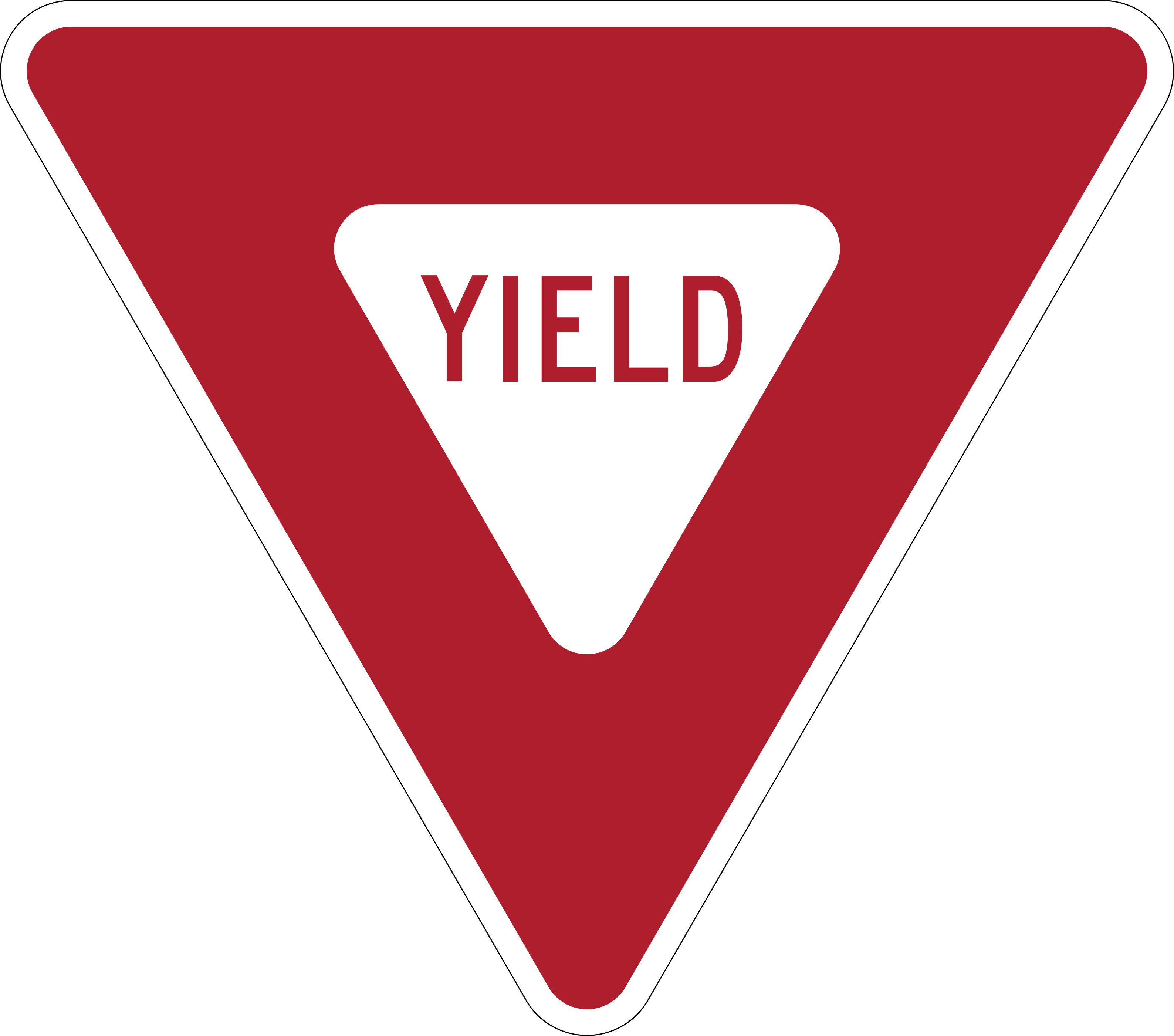
Correct answer: Slow down or stop to yield to pedestrians and any vehicle with the right-of-way
Why: A yield sign means you must slow down or stop to yield to all pedestrians and any vehicle with the right-of-way (Colorado Driver Handbook, DR 2337, January 2025, p. 7).
-
Q2. Where should you place your hands on the steering wheel for the best control?
Correct answer: At 9 and 3 o'clock, or at 8 and 4 o'clock
Why: Keep both hands on the wheel. The most effective hand positions are 8 and 4 o'clock or 9 and 3 o'clock (Colorado Driver Handbook, p. 18).
-
Q3. On a multi-lane road, a car in the lane next to you has stopped at a crosswalk. What must you do?
Correct answer: Stop behind the crosswalk in your lane; do not pass
Why: When you approach a vehicle stopped at a crosswalk, you must not pass; stop behind it or behind the crosswalk in the next lane (Colorado Driver Handbook, DR 2337, January 2025, p. 9).
-
Q4. Before a legal right turn on red, after coming to a complete stop, where should you look for bicyclists?
Correct answer: Behind or next to your vehicle
Why: Before turning right on red where it is legal, come to a complete stop and look for bicyclists behind or next to your vehicle (Colorado Driver Handbook, DR 2337, January 2025, p. 23).
-
Q5. You're driving on a public road. May a passenger have an open can of beer with them in the car?
Correct answer: No; open containers of alcohol aren't allowed in the passenger area
Why: It is unlawful for anyone to have an open container of alcohol or marijuana in the passenger area of a vehicle on a public road (Colorado Driver Handbook, p. 3).
-
Q6. Your brakes suddenly fail. What should you try first?
Correct answer: Take your foot off the gas and pump the brake pedal several times
Why: If your brakes fail, take your foot off the accelerator and pump the brake pedal several times to build up pressure. If that does not work, apply the parking brake slowly so you do not lock the rear wheels (Colorado Driver Handbook, p. 26).
-
Q7. You have moved into a two-way left-turn lane like this one, but oncoming traffic is coming. What may you do?
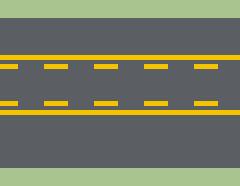
Correct answer: Stop in that lane until it is safe to finish the turn
Why: You may stop in the two-way left-turn lane until it is safe to complete the turn (Colorado Driver Handbook, DR 2337, January 2025, p. 10).
-
Q8. What does a "Bicycle May Use Full Lane" sign like this one remind drivers?
Correct answer: Bicyclists may ride in the center of the lane if the right side is unsafe
Why: These signs remind drivers that bicyclists have a right to ride in the center of the lane if hazards or poor visibility make the right side unsafe (Colorado Driver Handbook, DR 2337, January 2025, p. 9).
-
Q9. You want to go straight through an intersection and the light is steady red. What must you do?
Correct answer: Stop and wait until a green light appears
Why: A steady red light means stop until a green light appears (Colorado Driver Handbook, DR 2337, January 2025, p. 7).
-
Q10. You're backing up and want the back of the car to go to the right. Which way do you turn the steering wheel?
Correct answer: To the right
Why: Always turn the steering wheel in the direction you want the vehicle to move, whether going forward or in reverse (Colorado Driver Handbook, p. 6).
-
Q11. Your green turn arrow goes off, but the round green light is still on. May you still turn?
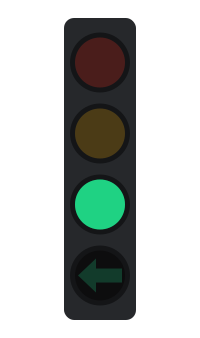
Correct answer: Yes, after yielding to through vehicles and pedestrians
Why: If the green arrow goes off but the circular green is on, you may still turn after yielding to through vehicles and pedestrians, unless a sign or red arrow prohibits it (Colorado Driver Handbook, DR 2337, January 2025, p. 7).
-
Q12. What should you do when you see a Do Not Enter sign like this one, or a Wrong Way sign, facing you?
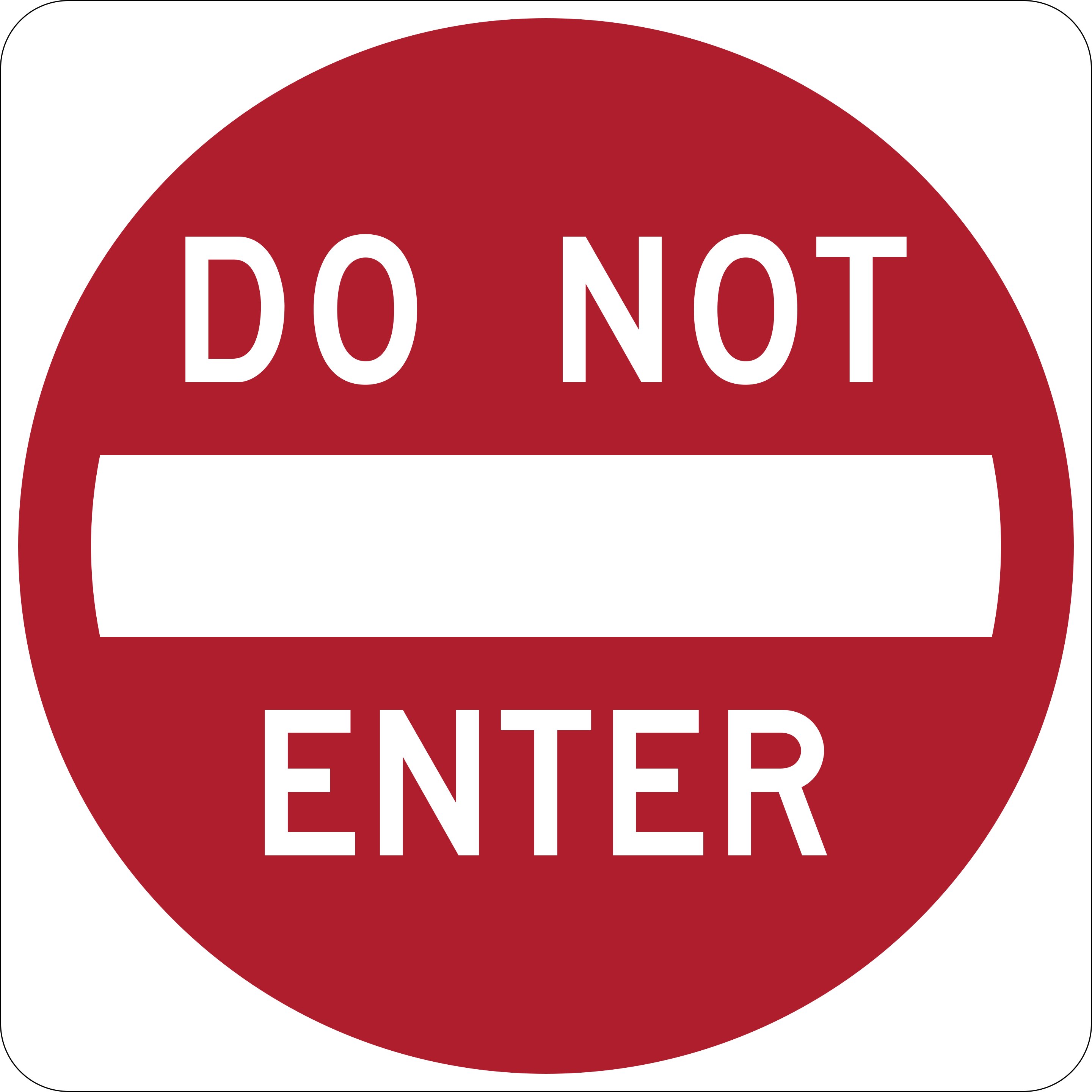
Correct answer: Do not go past the sign
Why: Do Not Enter and Wrong Way signs warn drivers heading the wrong way on streets or freeway ramps, and you must not proceed past one (Colorado Driver Handbook, DR 2337, January 2025, p. 8).
-
Q13. What does an advisory speed sign like this one show?

Correct answer: The safe speed around curves, corners and off-ramps in ideal conditions
Why: Advisory speed signs are cautionary signs that show the safe speed around curves, corners and off-ramps in ideal conditions (Colorado Driver Handbook, DR 2337, January 2025, p. 8).
-
Q14. When may you park in the crosshatched section next to a disabled parking space?
Correct answer: Never; it is for van access only
Why: Crosshatched sections are for van access only, and parking there is not allowed at any time (Colorado Driver Handbook, DR 2337, January 2025, p. 9).
-
Q15. What does a broken white line between lanes, like this one, mean?

Correct answer: You may change lanes if it is safe
Why: A broken white line means you may change lanes if it is safe (Colorado Driver Handbook, DR 2337, January 2025, p. 9).
-
Q16. What does green paint on the road mark?
Correct answer: A lane or area for bicyclists
Why: Green paint marks a lane or area of the road designated for bicyclists and makes bicyclists more visible (Colorado Driver Handbook, DR 2337, January 2025, p. 9).
-
Q17. If your vehicle has anti-lock brakes (ABS) and you need to stop quickly on a slick surface:
Correct answer: Apply firm, steady pressure on the brake pedal
Why: With ABS, press and hold firm pressure; the system prevents wheel lockup.
-
Q18. What does Colorado law say about drivers and bike lanes?
Correct answer: Drivers may not drive, idle or park in a bike lane
Why: Bicyclists and other authorized users have the right-of-way in a bike lane, and drivers are prohibited from driving, idling or parking in it or otherwise blocking it (Colorado Driver Handbook, DR 2337, January 2025, p. 10).
-
Q19. Approaching a railroad crossing without gates in rural Colorado, you must:
Correct answer: Slow down, look and listen, and be prepared to stop
Why: Always look and listen; be ready to stop if a train is approaching.
-
Q20. You're driving a car and reach a roundabout at the same time as a large truck. Who must yield?
Correct answer: You must yield to the truck
Why: Colorado law requires drivers to yield to a truck, bus, emergency vehicle or RV when entering, exiting or driving in a roundabout (Colorado Driver Handbook, p. 10).
-
Q21. May you use a two-way left-turn lane, like this one, to pass a slow vehicle?
Correct answer: No; it may be used only to make a left turn
Why: The two-way left-turn lane shall not be used for passing or travel except to make a left turn (Colorado Driver Handbook, DR 2337, January 2025, p. 10).
-
Q22. Reversible lanes, which carry traffic in different directions at different times, are separated by:
Correct answer: A barrier or double broken yellow lines
Why: Reversible lanes carry traffic one way at certain times and the opposite way at other times, and are separated by a barrier or marked by double broken yellow lines (Colorado Driver Handbook, DR 2337, January 2025, p. 10).
-
Q23. When turning left, you must yield to all oncoming traffic unless:
Correct answer: You have a green arrow or arrived first at a four-way stop
Why: When turning left you must yield to all oncoming traffic, unless you have a green arrow or arrived first at a four-way stop (Colorado Driver Handbook, DR 2337, January 2025, p. 11).
-
Q24. On a multi-lane roundabout, before exiting you should:
Correct answer: Signal right and check mirrors/blind spot for bicycles and smaller vehicles
Why: Signal and check around you; bicycles and motorcycles can be hard to see.
-
Q25. A school bus is stopped ahead with its red lights flashing. What is the minimum distance from the bus at which you must stop?
Correct answer: 20 feet
Why: You must stop at least 20 feet before reaching a school bus that is stopped with its red lights flashing (Colorado Driver Handbook, DR 2337, January 2025, p. 11).
-
Q26. When is it legal to drive below a posted minimum speed limit on a freeway?
Correct answer: When road or weather conditions require it
Why: Driving slower than the minimum speed limit is a traffic violation, unless it is due to road or weather conditions (Colorado Driver Handbook, DR 2337, January 2025, p. 12).
-
Q27. You're driving a 6-year-old who weighs 45 pounds. How must the child ride?
Correct answer: In a booster seat or child car seat in the back seat, if there is one
Why: Children ages 4 through 8 who weigh at least 40 pounds must ride in a booster seat or child car seat, in the back seat if there is one (Colorado Driver Handbook, p. 3).
-
Q28. If your vehicle's turn signals do not work, what must you do?
Correct answer: Use hand signals
Why: If your vehicle's turn signals do not work, you must use hand signals (Colorado Driver Handbook, DR 2337, January 2025, p. 12).
-
Q29. When turning left, where in your lane should you be?
Correct answer: The left side of your lane
Why: The handbook says that when turning left you should be in the left side of your lane (Colorado Driver Handbook, DR 2337, January 2025, p. 12).
-
Q30. When is a U-turn allowed?
Correct answer: Only when it won't endanger others and no sign forbids it
Why: U-turns are forbidden unless they can be made without endangering other motorists, and they are not allowed where No U-turn signs are posted (Colorado Driver Handbook, DR 2337, January 2025, p. 13).
-
Q31. Can you park your vehicle on a bridge?
Correct answer: No, parking on a bridge is not allowed
Why: A bridge is on the handbook's list of places where you cannot park, along with crosswalks, sidewalks and railroad tracks (Colorado Driver Handbook, DR 2337, January 2025, p. 13).
-
Q32. When you park headed downhill on a road with no curb, which way should you turn your wheels?
Correct answer: To the right
Why: The handbook says that when headed downhill with no curb, you also turn your wheels to the right (Colorado Driver Handbook, DR 2337, January 2025, p. 14).
-
Q33. When entering a freeway, you should not merge into traffic until:
Correct answer: The solid white line has ended
Why: The handbook says not to merge into traffic until the solid white line has ended (Colorado Driver Handbook, DR 2337, January 2025, p. 14).
-
Q34. As you approach a freeway merge area, what should you do if it is safe?
Correct answer: Move over to make room for entering vehicles
Why: Move over, if it is safe, when approaching a merge area to make room for vehicles entering the freeway (Colorado Driver Handbook, DR 2337, January 2025, p. 14).
-
Q35. When exiting a freeway, when should you start to slow down?
Correct answer: After you enter the deceleration lane
Why: Keep your speed until you enter the deceleration lane, then slow down to the speed advised for the exit ramp (Colorado Driver Handbook, DR 2337, January 2025, p. 15).
-
Q36. After passing a vehicle, when should you move back into your lane?
Correct answer: When you see both its headlights in your rearview mirror
Why: When you can see both headlights of the vehicle you passed in your rearview mirror, change one lane back into your previous lane (Colorado Driver Handbook, DR 2337, January 2025, p. 15).
-
Q37. How many vehicles should you pass at one time?
Correct answer: Only one
Why: Do not count on passing several vehicles at once; to be safe, pass only one vehicle at a time (Colorado Driver Handbook, DR 2337, January 2025, p. 15).
-
Q38. While passing another vehicle, may you go faster than the posted speed limit?
Correct answer: No, exceeding the limit while passing is illegal
Why: Exceeding the posted speed limit when passing is on the handbook's list of illegal passing behaviors (Colorado Driver Handbook, DR 2337, January 2025, p. 16).
-
Q39. When should you slow down for a curve?
Correct answer: Before you enter the curve
Why: Always slow down before entering a curve; if you go through too fast, your tires can't grip and the vehicle will skid (Colorado Driver Handbook, DR 2337, January 2025, p. 16).
-
Q40. When following another vehicle, you must use low beams with fog lights off if you are within how many feet of it?
Correct answer: 200 feet
Why: When following another vehicle within 200 feet, you must use your low beams with your fog lights off (Colorado Driver Handbook, p. 16).
-
Q41. While backing up, how long should you keep looking to the rear?
Correct answer: Until you come to a complete stop
Why: Keep looking to the rear the whole time you back up, until you come to a complete stop (Colorado Driver Handbook, p. 7).
-
Q42. What colors are regulatory signs, the signs that tell you the laws for that spot?
Correct answer: Black or red on a white background
Why: Regulatory signs tell you the laws that apply at a location and are black or red on a white background (Colorado Driver Handbook, p. 7).
-
Q43. Your car is hydroplaning on a wet road. When should you try to stop or turn?
Correct answer: Not until your tires are gripping the road again
Why: When your tires are riding on water, do not try to stop or turn until they are gripping the road again (Colorado Driver Handbook, p. 16).
-
Q44. Before a short trip on a frosty morning, how much ice, snow and frost should you scrape off your windows?
Correct answer: All of it, even for a short trip
Why: Use a good scraper to remove all ice, snow and frost, even if you are only traveling a short distance (Colorado Driver Handbook, DR 2337, January 2025, p. 17).
-
Q45. Unless a sign shows a different limit, what is the speed limit on open mountain highways in Colorado?
Correct answer: 40 mph
Why: Unless another limit is posted, the speed limit on open mountain highways is 40 mph (Colorado Driver Handbook, p. 12).
-
Q46. You are in the middle of an intersection when an emergency vehicle with a siren approaches. What should you do?
Correct answer: Drive through the intersection, then pull over
Why: If you are in an intersection when an emergency vehicle approaches, drive through the intersection, then pull over (Colorado Driver Handbook, DR 2337, January 2025, p. 11).
-
Q47. You come to a stop sign, and there is a clearly marked white stop line on the road, like this one. Where must you stop?

Correct answer: At the stop line
Why: When there is a clearly marked stop line, you must stop at that line (Colorado Driver Handbook, p. 7).
-
Q48. You are stopped in traffic, and the cars in the lanes beside you are stopped too. A two-wheeled motorcycle slowly passes you within your lane. Is this legal in Colorado?
Correct answer: Yes, if there is room and it goes no faster than 15 mph
Why: In Colorado, a two-wheeled motorcycle may pass stopped vehicles in the same lane when the vehicles in the lanes beside it are also stopped and there is room to pass safely at no more than 15 mph. This is called lane filtering (Colorado Driver Handbook, p. 19).
-
Q49. When a school bus is about to stop to load or unload children, which lights does the driver turn on?
Correct answer: Amber (yellow) warning lights
Why: When a school bus is about to stop to load or unload children, the driver turns on amber warning lights, which stay on until the door opens (Colorado Driver Handbook, DR 2337, January 2025, p. 20).
-
Q50. At a stop sign with no stop line and no crosswalk, where must you stop?
Correct answer: At the point nearest the cross street where you can see approaching traffic
Why: With no stop line or crosswalk, stop at the point nearest the cross street where you can see approaching traffic (Colorado Driver Handbook, p. 7).